

USEducation
Agency Bonds vs CDs vs the 10-Year Treasury: What Do You Actually Keep?
The investment with the highest advertised rate may not leave you with the most money. Taxes, early-sale losses and callable bonds can change the result.
AMFI-registered Mutual Fund DistributorAMFI-registered MFD · ARN-286779
info@npspfin.comInsights
Plain English, checked against primary sources, and dated, so you know what you’re reading.
The investment with the highest advertised rate may not leave you with the most money. Taxes, early-sale losses and callable bonds can change the result.

A simple mutual-fund model for an Indian family with a ten-year horizon: 50% in equity funds, 25% in government-debt funds and 25% in short-term debt.

India offers abundant opportunities for active managers. The evidence still says that most investors should treat a broad, low-cost index as the default and make every active fund prove its place.

Both may hold the conservative part of a portfolio, but an FD promises a contractual rate while a debt fund exposes investors to changing NAVs, duration, credit and liquidity risk.

The problem is not that skilled active managers cannot exist. It is that an investor must identify them before the fees, style changes and bad years arrive.

A simple mutual-fund model for a moderate, long-horizon investor: 50% in a broad stock index, 25% in government bonds and 25% in short-term debt.

A certificate of deposit can make an excellent promise for a fixed period. The mistake is turning today's rate into a lifetime return assumption.

Our 50/25/25 model will not beat every great manager. It is designed to give an ordinary investor a better chance of long-term success without having to identify tomorrow's winner in advance.
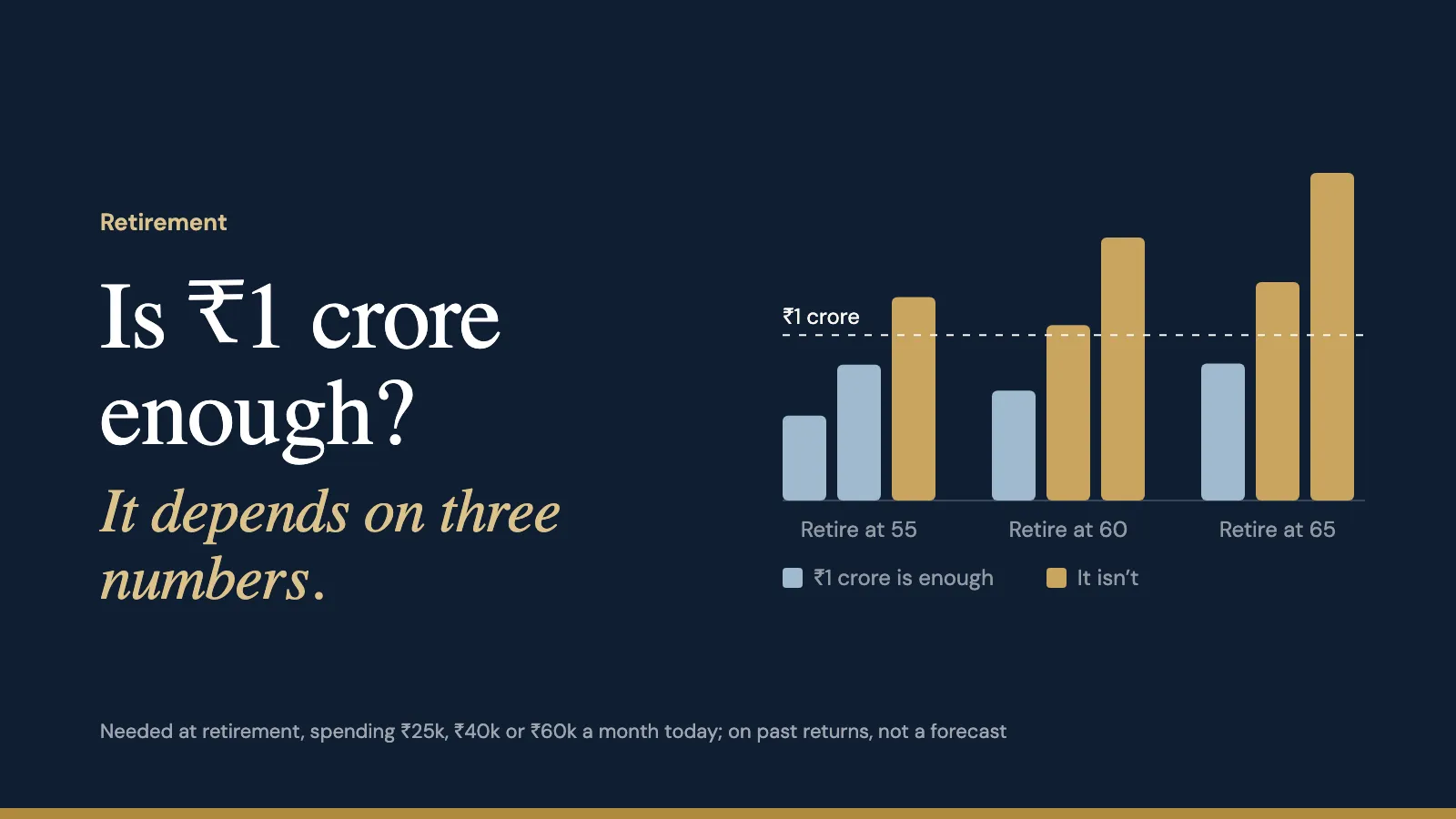
For some people ₹1 crore is plenty. For others it runs out before 75. The difference comes down to three numbers: what you spend, when you stop work, and where the money sits. Here they are, worked out.
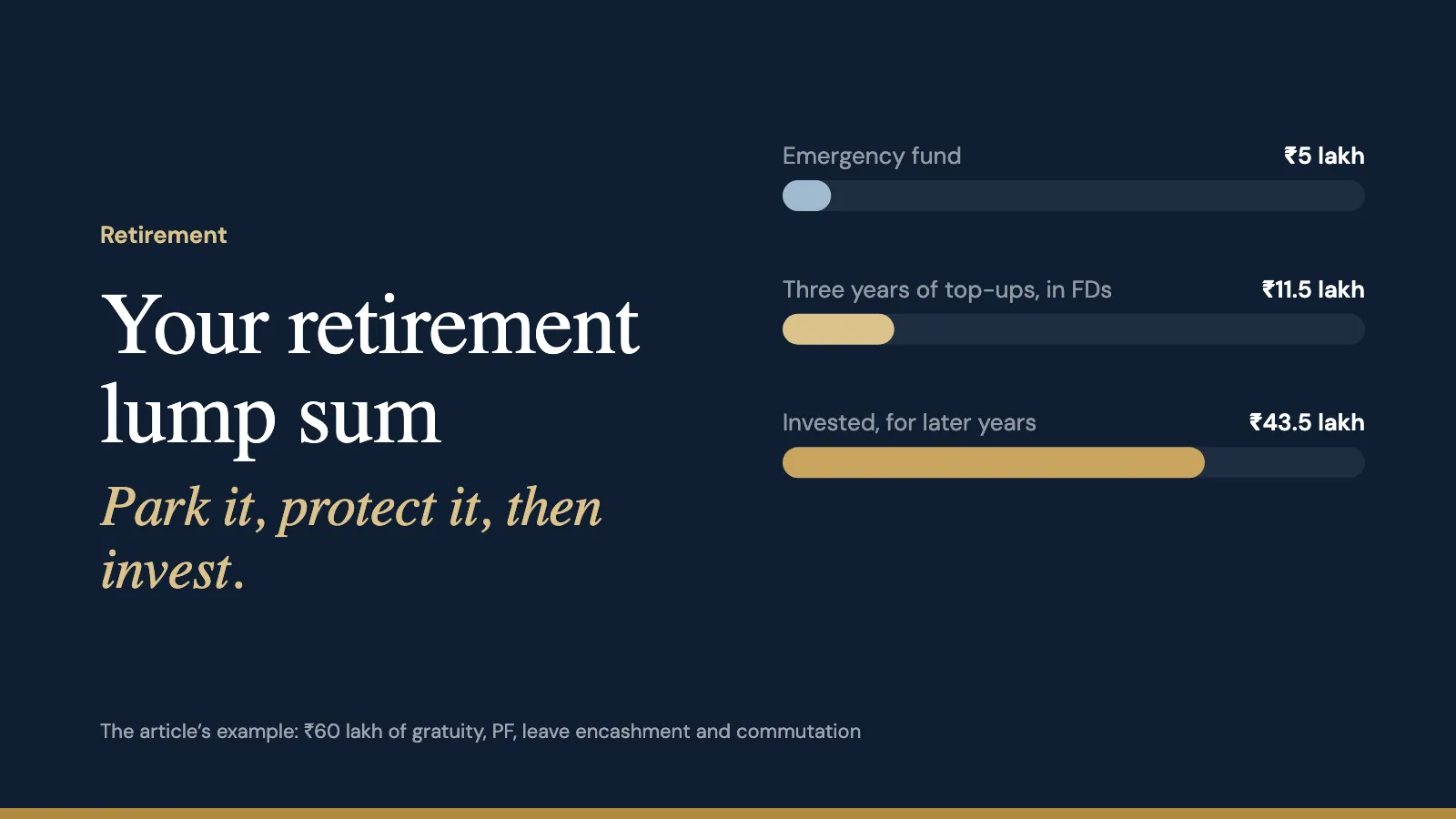
Gratuity, PF, leave encashment and commuted pension can all land in the same month. Here's where to park it, what's tax-free, when the SCSS window closes, and how to turn it into a top-up for your pension, with a worked example.
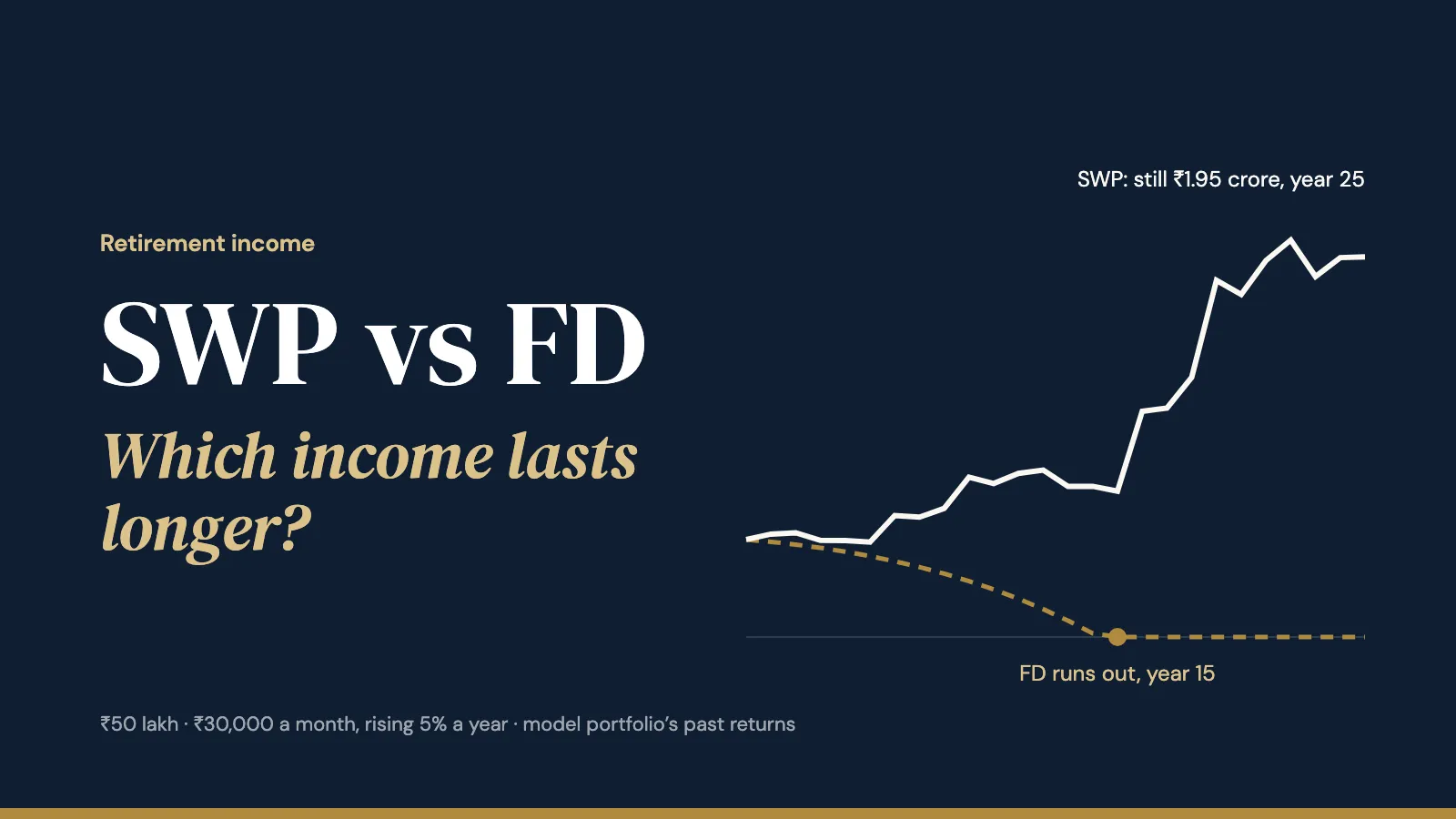
An FD pays you the same every month and never falls. An SWP can pay you a rising income for longer, and only its gains are taxed, but its value moves. Here is ₹50 lakh both ways, and why many retirees use both.
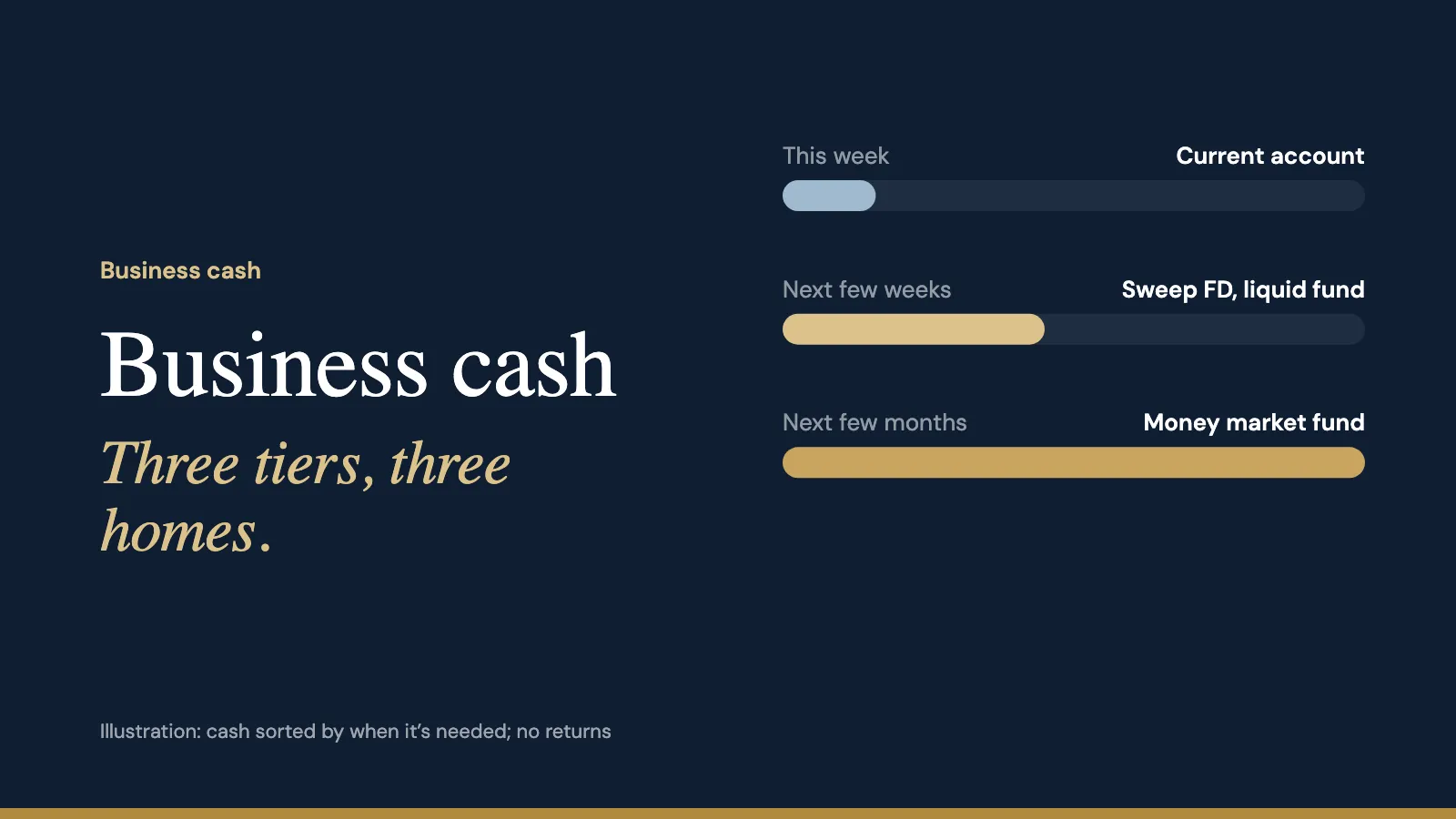
Most business cash has three jobs: this week’s payments, the next few weeks’ and the next few months’. A current account, a sweep FD and an overnight, liquid or money market fund each suit a different job. Here is how they compare, side by side.
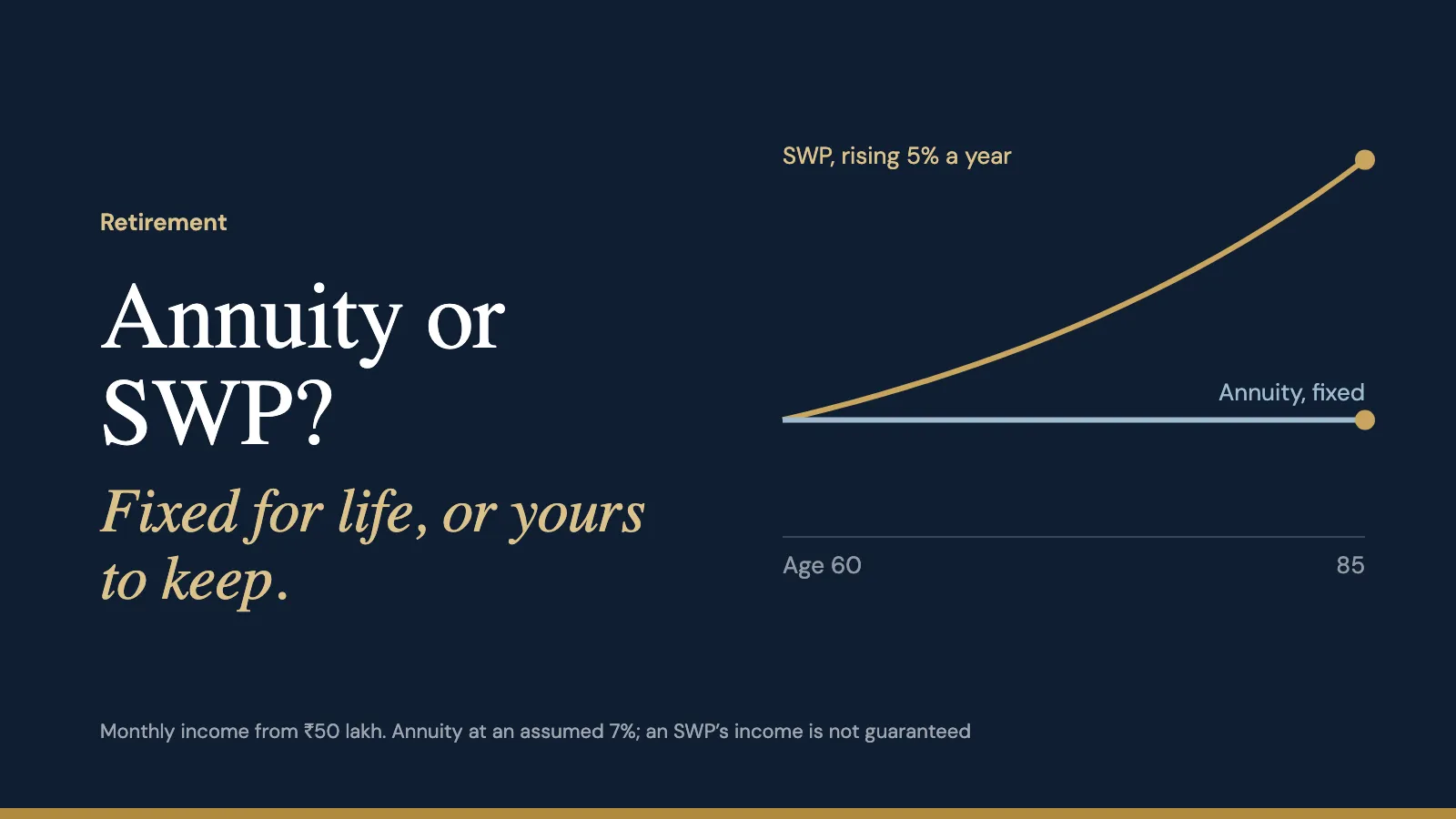
An annuity pays you a fixed income for life, however long you live, but the money is gone. An SWP keeps the money yours and can pay a rising income, but its value moves. Here's a fair comparison, from a firm that arranges only one of them.
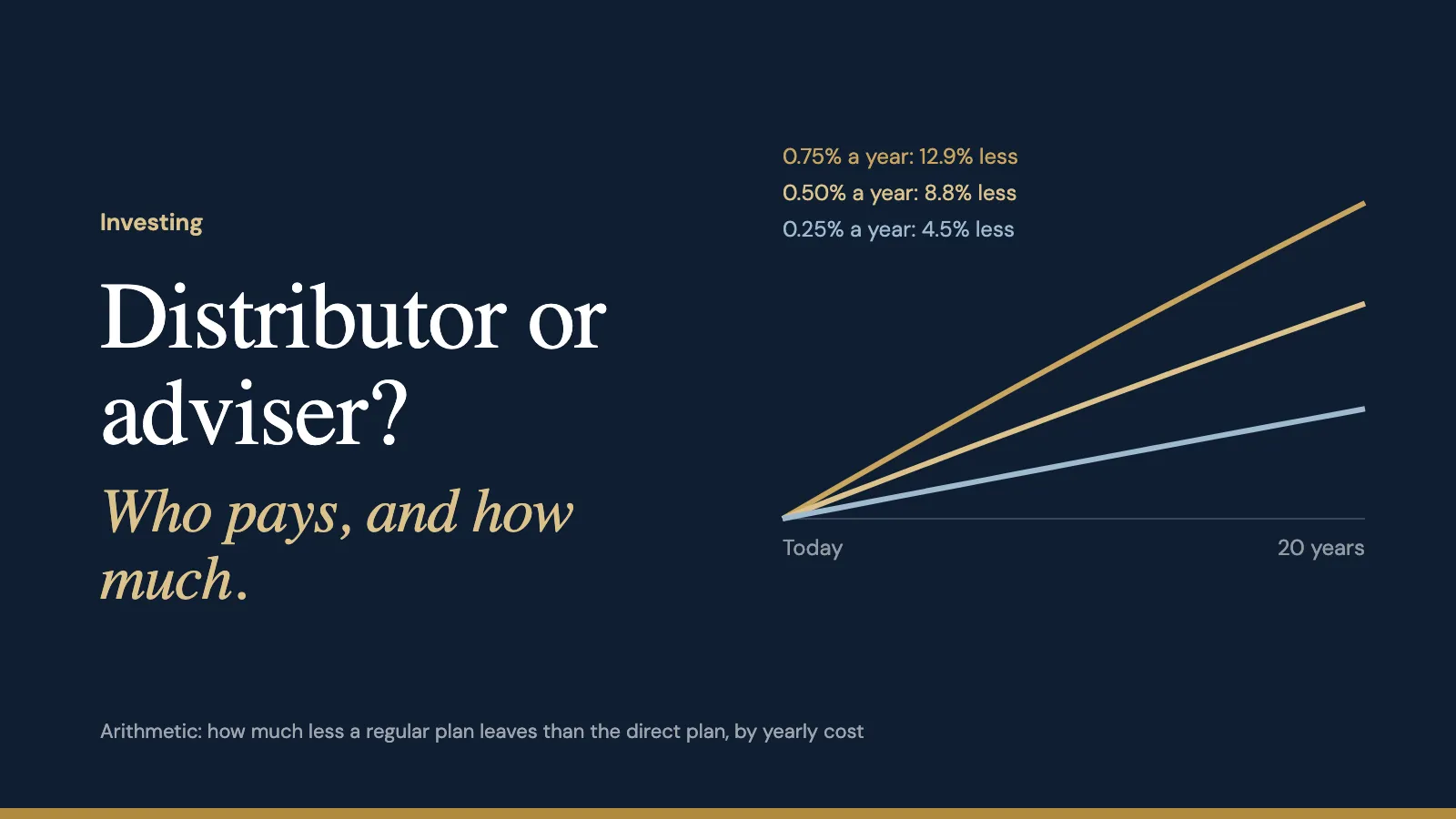
We are a mutual fund distributor, so you might expect us to tell you that you need one. Instead, here is how both kinds of help work, what each costs you, and when you would be better off without us.

Survey number 403 in Jubilee Hills runs to 1,288 acres. Two plots were under a claim, and the whole survey number went onto Telangana's prohibited list.
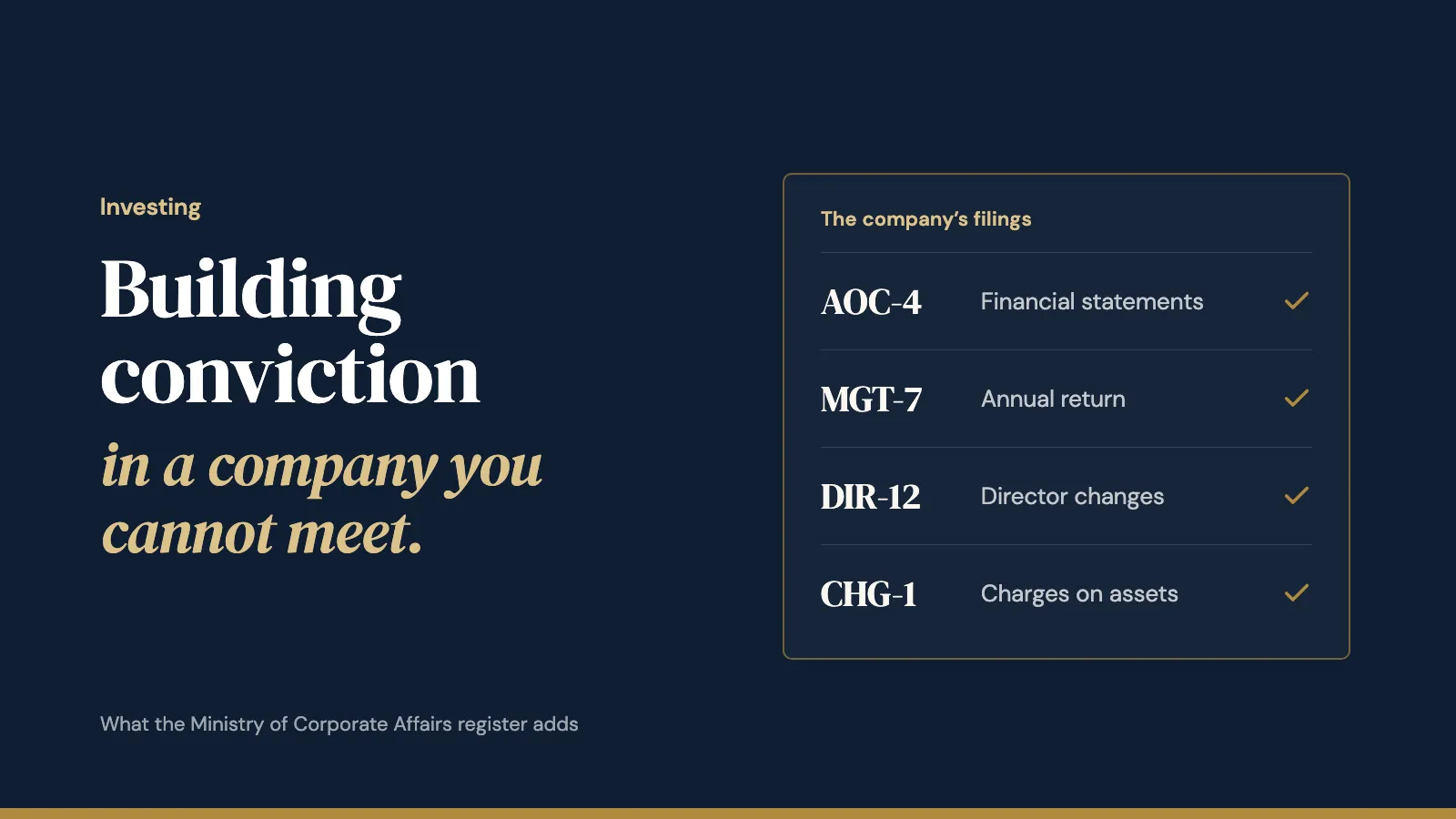
A pitch deck is the seller's version of a company. Its statutory filings are the version it had to submit. The gap between them is where the risk lives.
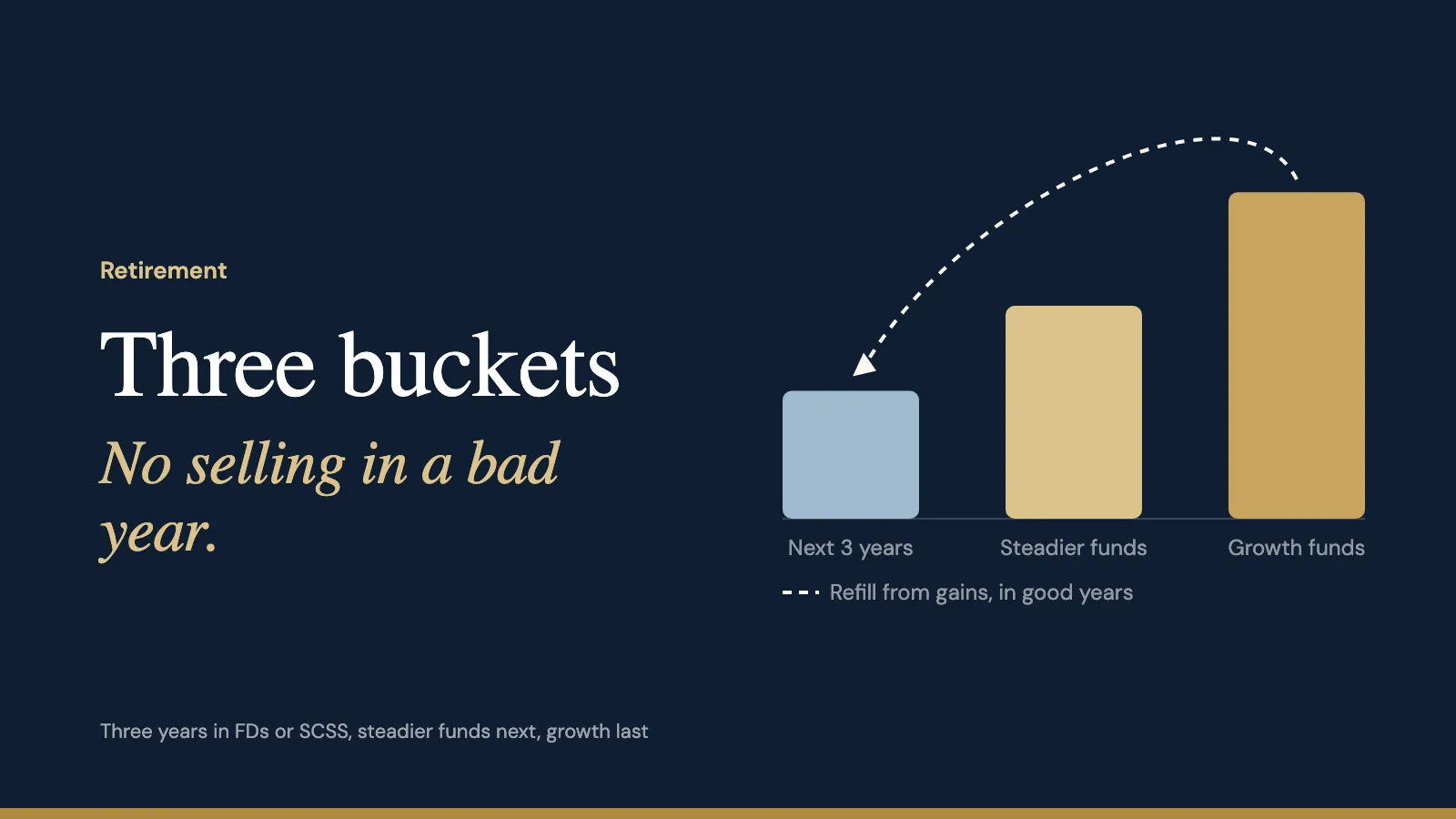
The same returns in a different order can halve what's left of your savings once you start withdrawing. A three-bucket plan keeps your next three years of income out of the market, so a bad year never forces you to sell. This is how we set up retirement plans.
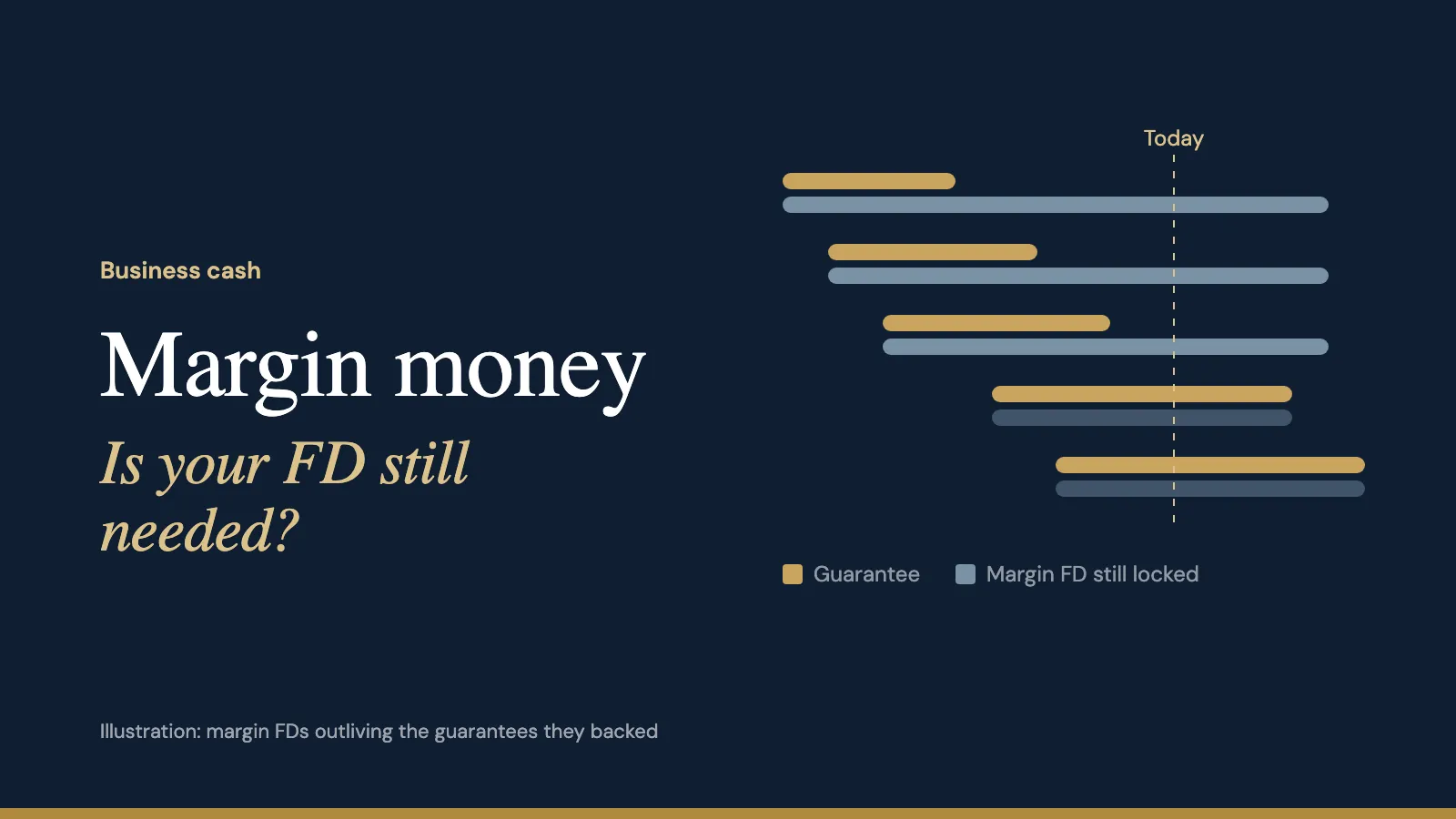
If your company gives bid and performance guarantees, some of its cash is probably sitting in FDs as margin, and some of those FDs may be backing guarantees that ended long ago. Here is how to find them, get them released, and what to ask your bank.
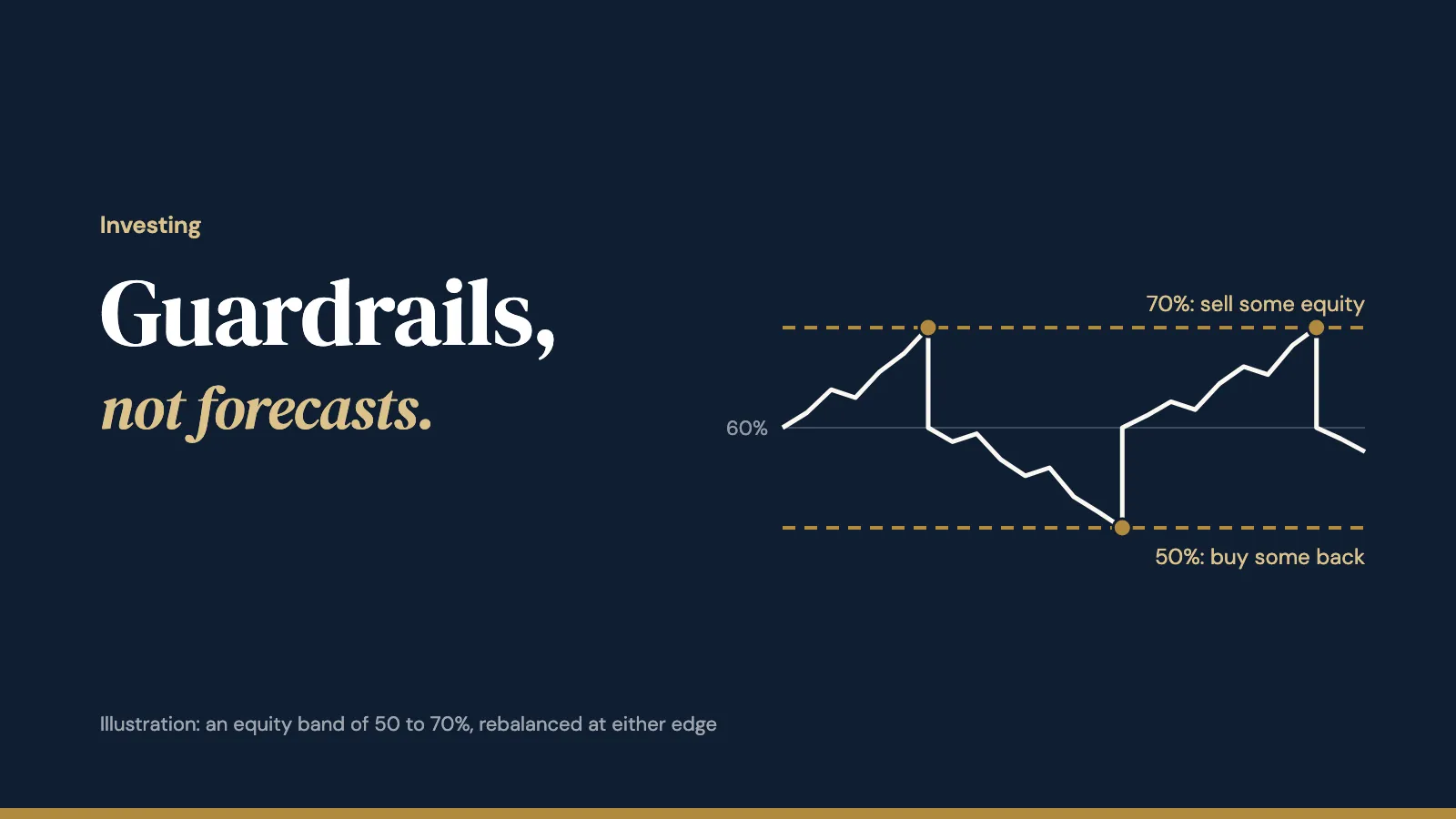
Nobody can tell you what markets will do next year. What you can decide in advance, and in writing, is what you will do when they move. That is a guardrail.
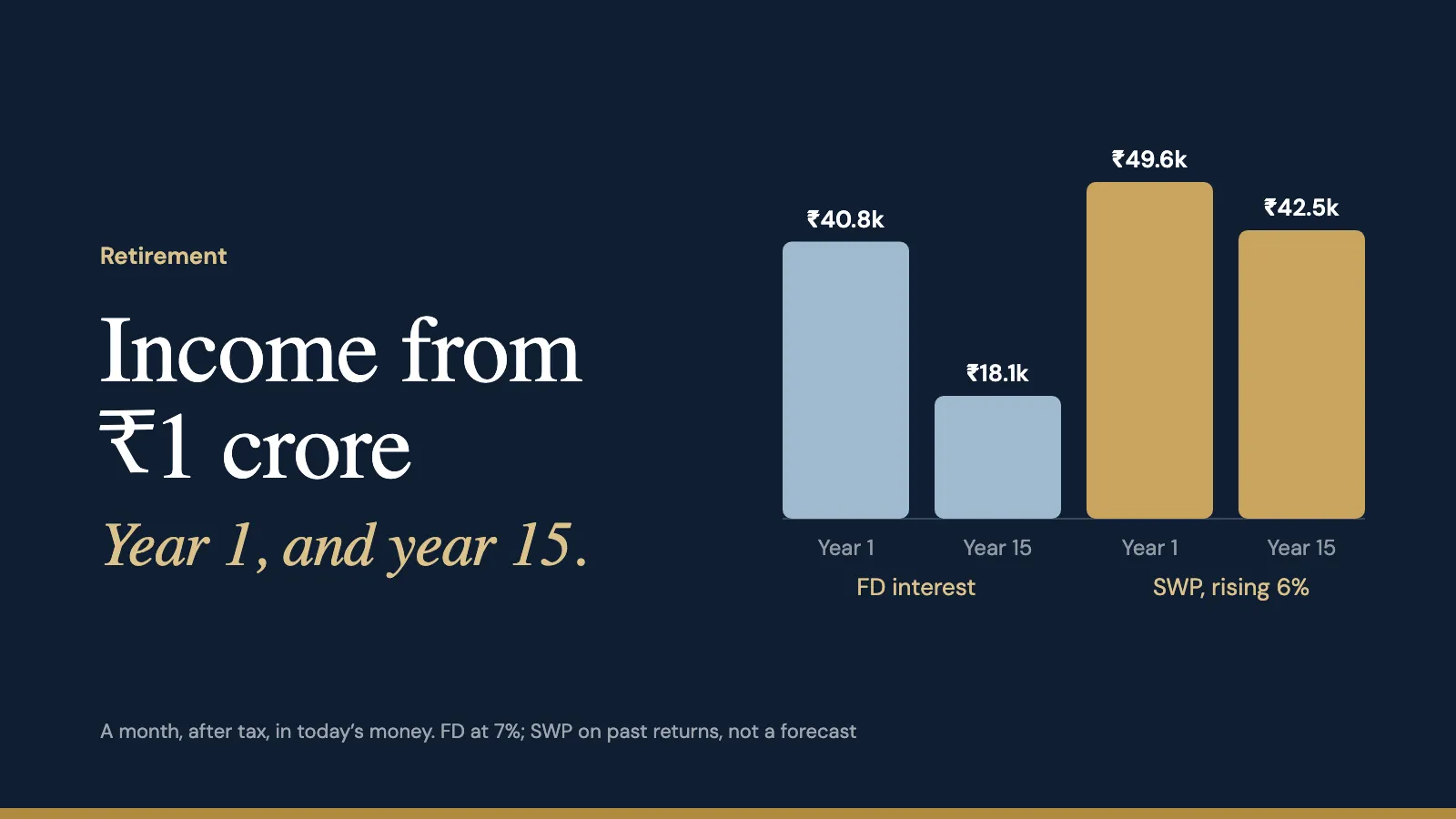
₹1 crore in an FD pays about ₹40,800 a month after tax, and by year 15 that buys what ₹18,100 does today. Here's what ₹50 lakh or ₹1 crore can pay from an FD, SCSS and an SWP, after tax and after inflation, and how safely.
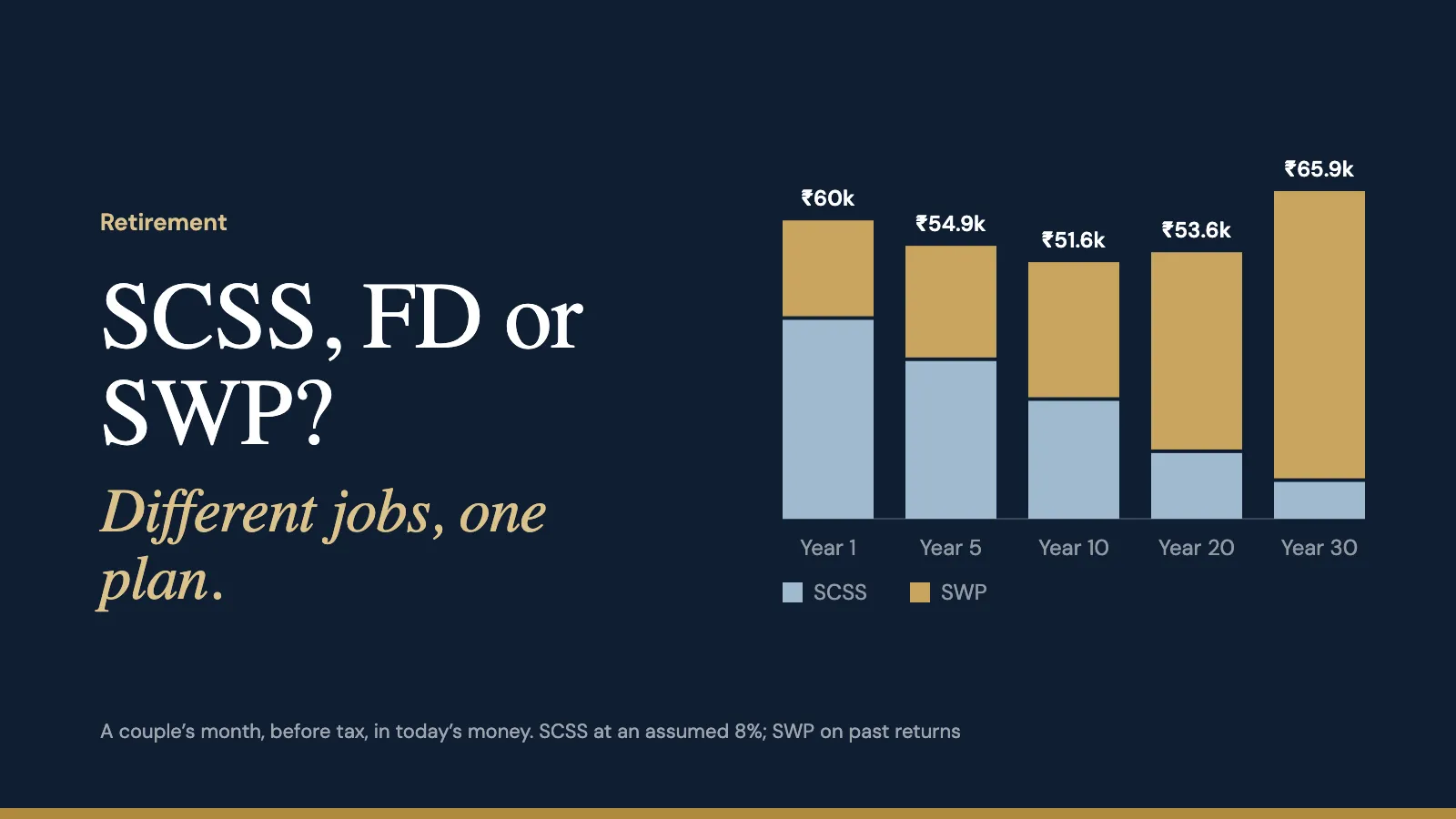
SCSS, a bank FD and a mutual fund SWP aren't rivals. Each is good at one job and poor at another. Here's how each works, how it's taxed, and how a couple with ₹1.2 crore might use all three.
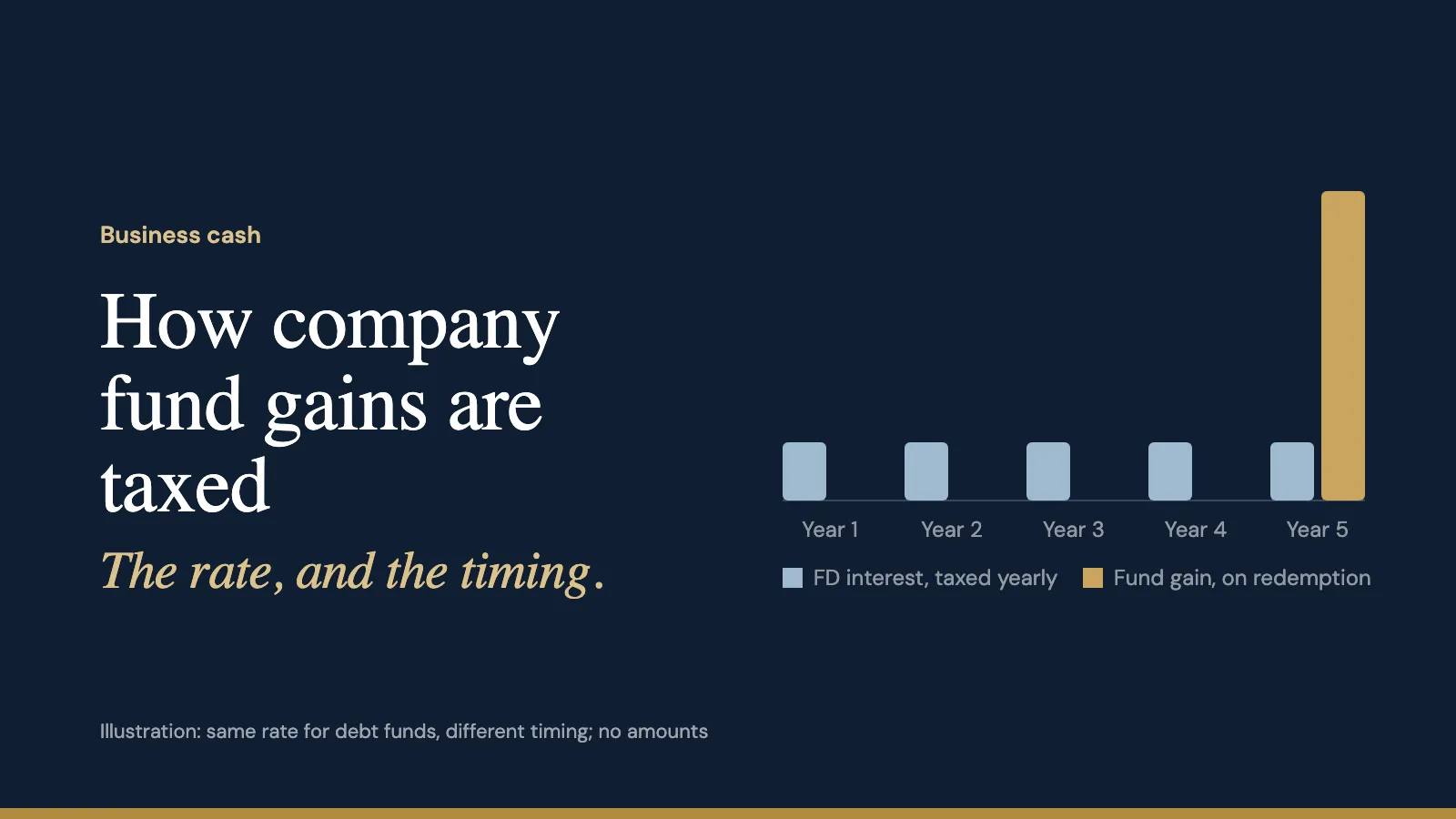
A company’s FD interest is taxed every year. Its liquid fund gains are taxed only when the units are sold, at the same rate. Here is how each kind of fund is taxed for a company or firm, when the tax falls due, and how it sits in the books.
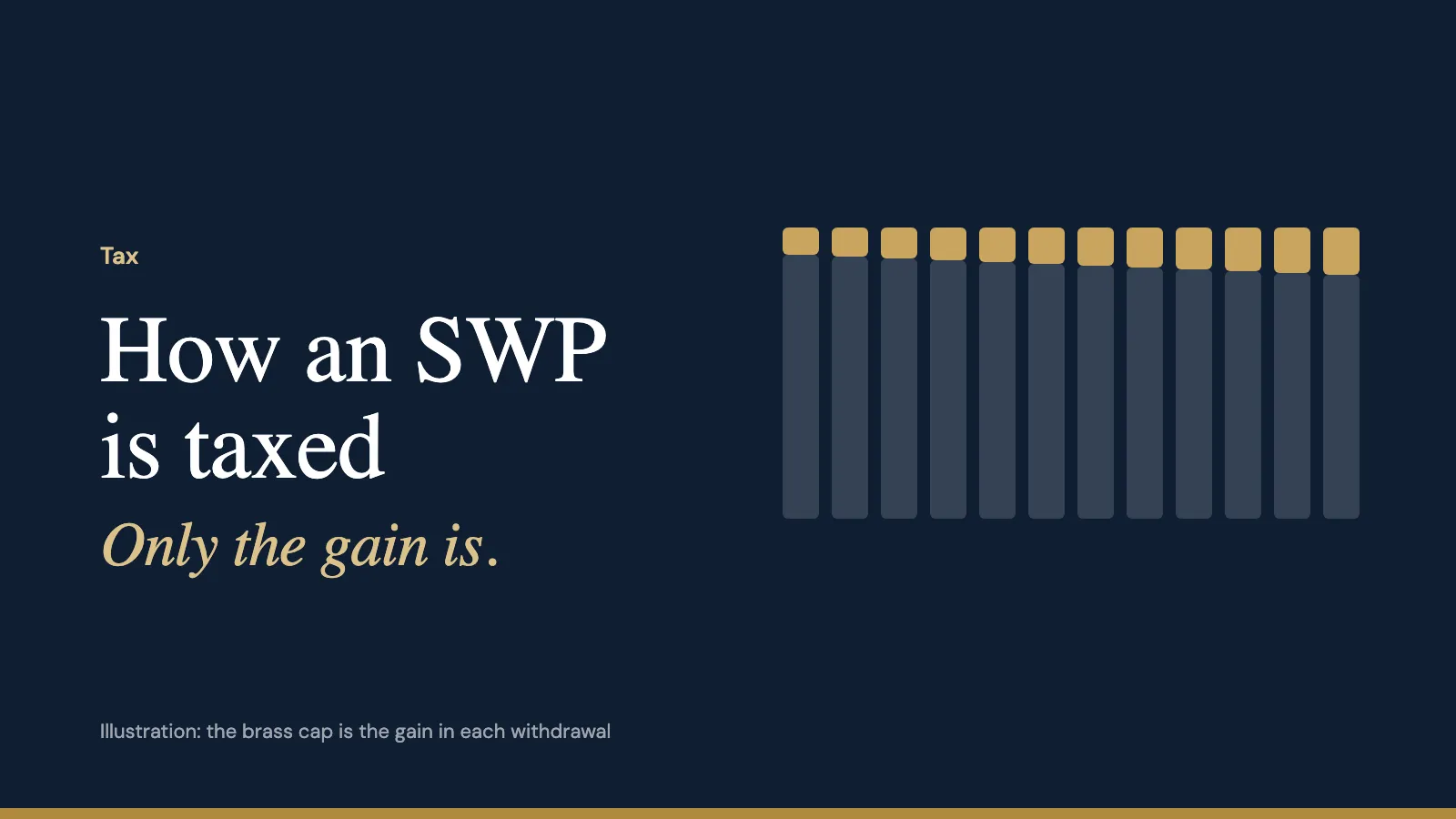
Each SWP payment is mostly your own money coming back, and only the gain in it is taxed. Here's how that gain is worked out, the rates for equity, debt and hybrid funds, and how it compares with IDCW and FD interest.
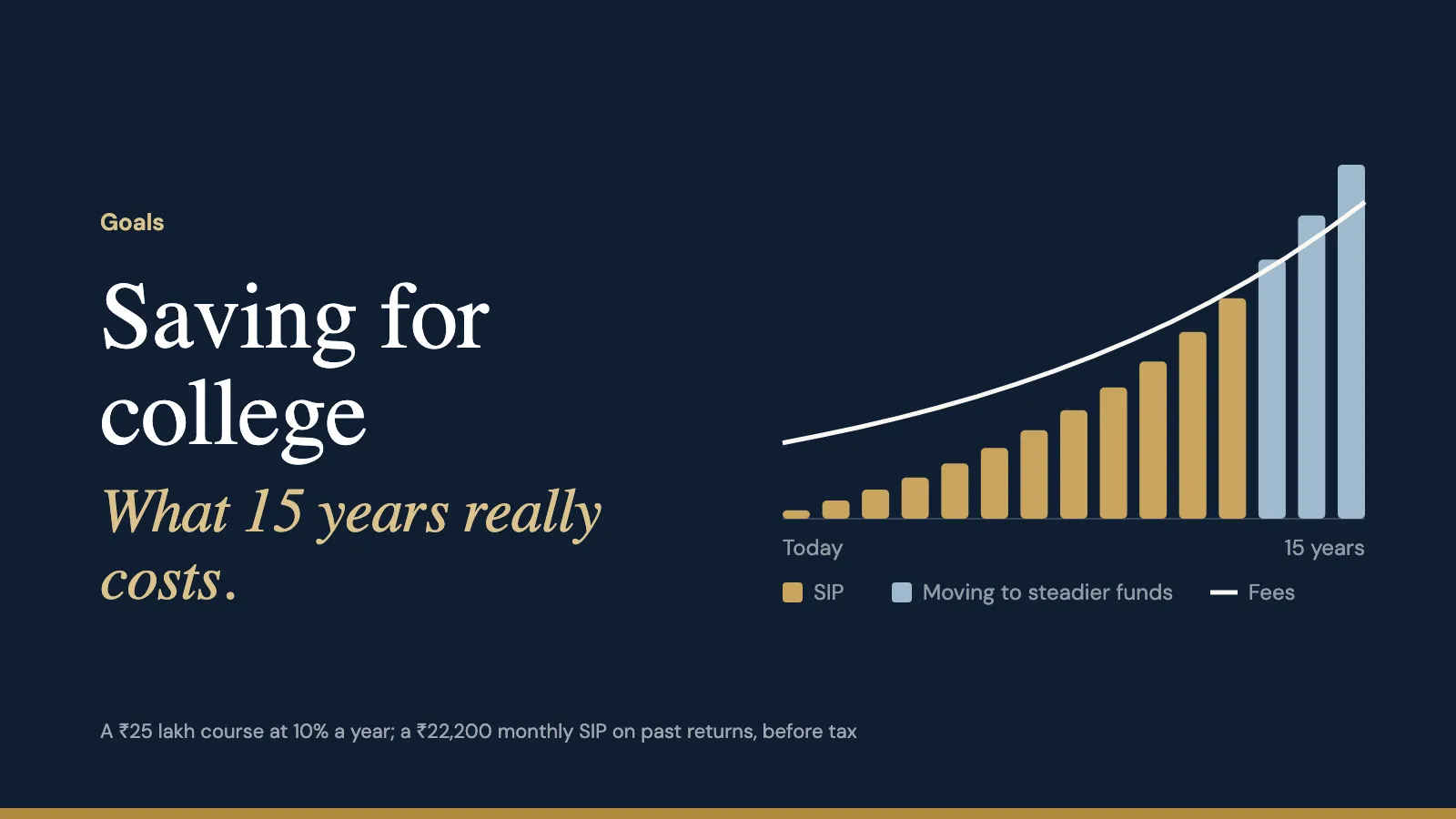
Fees rise faster than almost anything else you pay for. Here is what a course could cost in 15 years, the monthly SIP that gets you there, when to move to steadier funds, and where Sukanya Samriddhi fits.
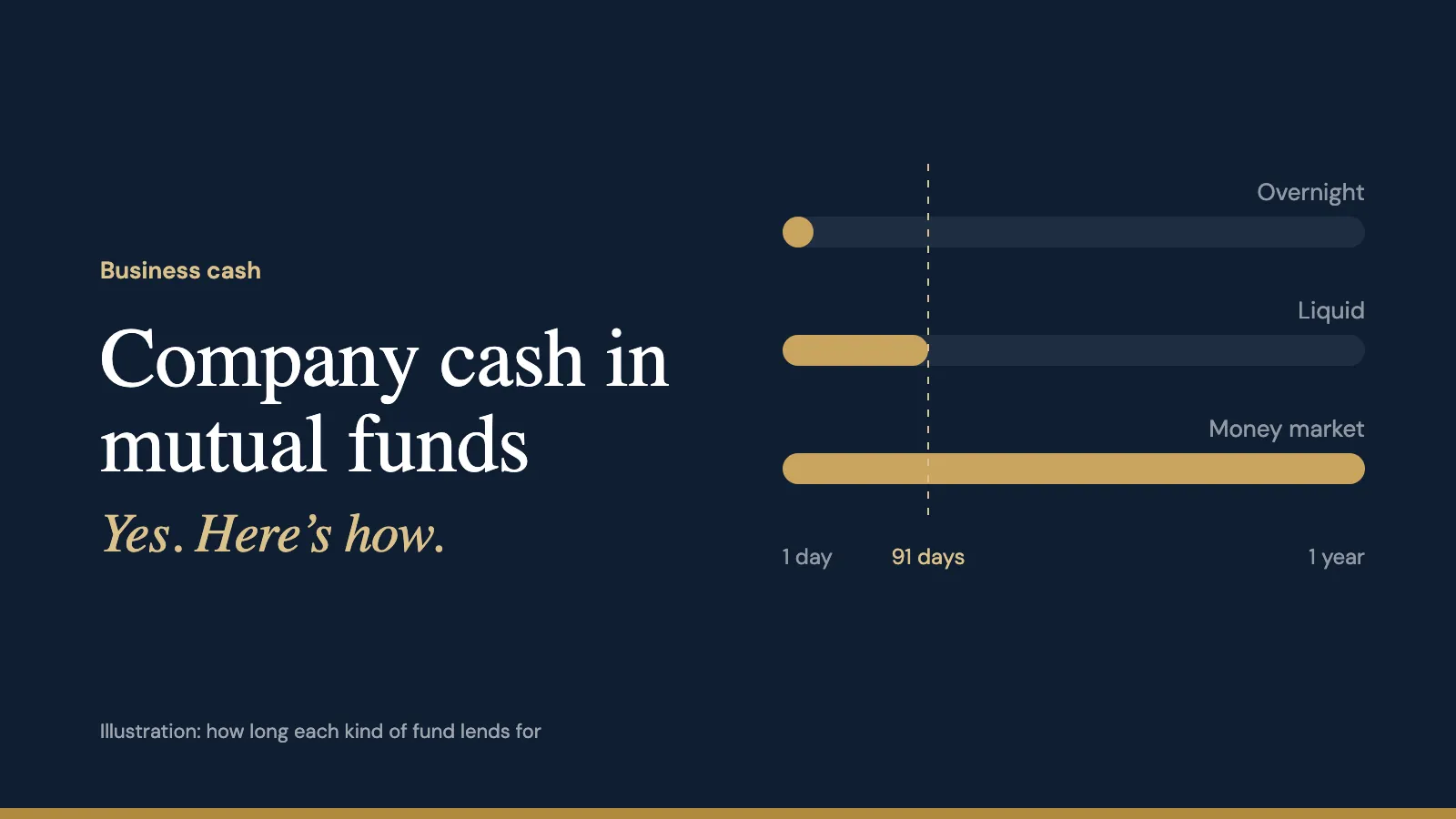
Yes, and so can an LLP, a partnership firm, a One Person Company or a Section 8 company. Here's who signs, what the board resolution should say, the KYC documents, and where each part of your business's cash can go.
Your next step