Retirement
Is ₹1 Crore Enough to Retire in India?
For some people ₹1 crore is plenty. For others it runs out before 75. The difference comes down to three numbers: what you spend, when you stop work, and where the money sits. Here they are, worked out.
· 7 min read
₹1 crore sounds like a lot of money, and for some people it’s plenty to retire on. For others it runs out before they turn 75.
The difference comes down to three numbers: what you spend, when you stop working, and where the money sits. Here’s what ₹1 crore really covers, worked out on the same engine as our retirement calculator.
The short answer
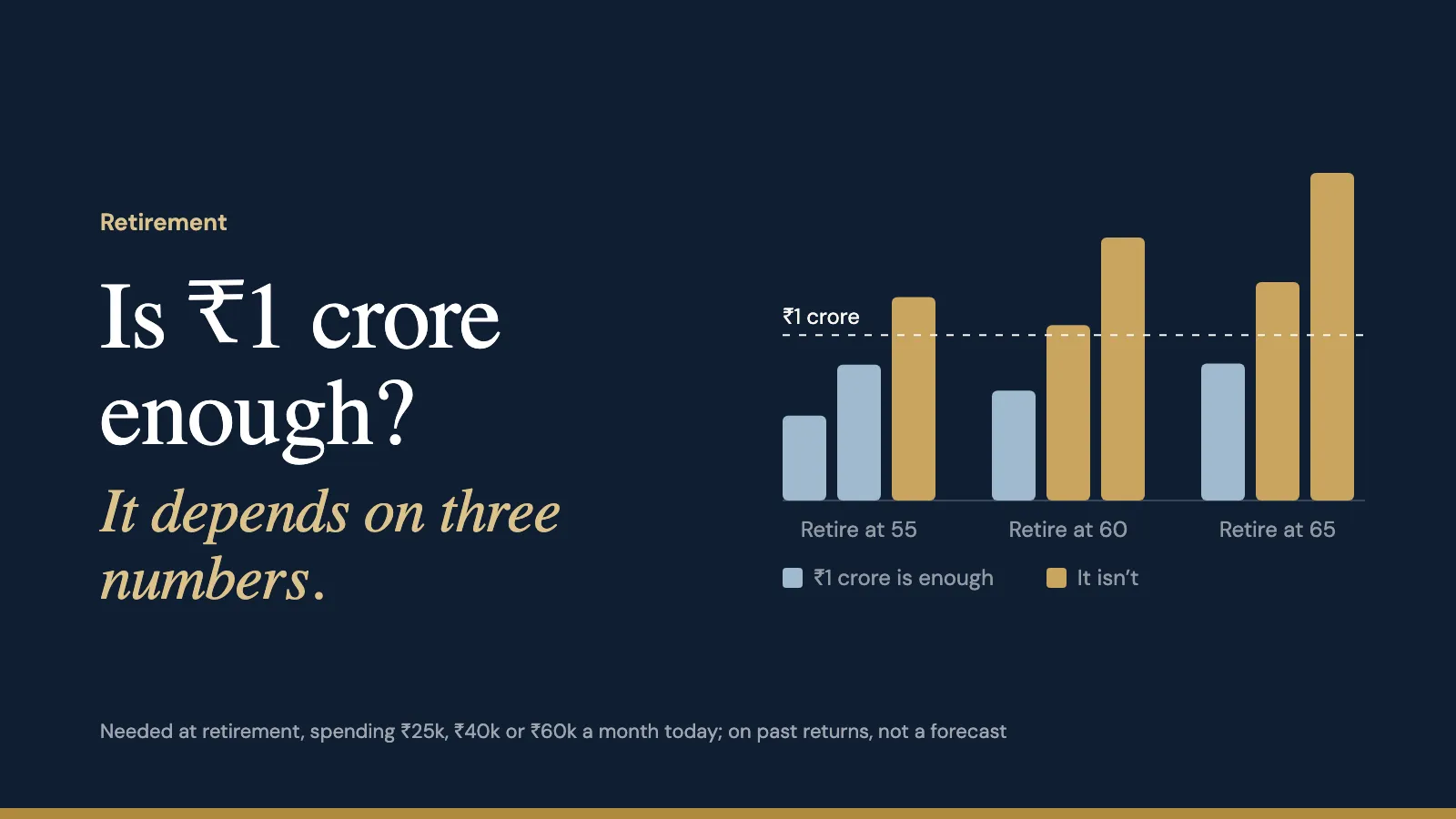
- If you spend about ₹25,000 a month today, ₹1 crore is enough, whether you retire at 55, 60 or 65, on our model portfolio’s past returns.
- At ₹40,000 a month, it’s enough at 55, just short at 60 and well short at 65. At ₹60,000 a month, it isn’t enough at any of those ages.
- ₹2 crore covers every case below, though the most expensive one only just.
- If all of it sat in FDs, you’d need roughly twice as much. Where the money sits matters as much as how much there is.
How much do you need to retire in India?
Take someone who is 50 today and hasn’t started saving for retirement, so the figures show the whole amount. They want the money to last until 85, and their spending rises 6% a year, before and after they retire.
Here’s what they’d need on the day they stop work.
| Monthly spend today | Retire at 55 | Retire at 60 | Retire at 65 |
|---|---|---|---|
| ₹25,000 | ₹51.3 lakh | ₹66.4 lakh | ₹82.7 lakh |
| ₹40,000 | ₹82.1 lakh | ₹1.06 crore | ₹1.32 crore |
| ₹60,000 | ₹1.23 crore | ₹1.59 crore | ₹1.98 crore |
The least amount that pays that spend, rising 6% a year, until 85. It’s drawn from our model portfolio, four equity funds and two debt funds held 50:50, on their actual month-by-month returns over ten years, repeated. Tax on each withdrawal is paid out of it. Past performance may or may not be sustained in future.
Two things stand out.
Prices do most of the damage. At 6% a year, ₹40,000 a month today is ₹53,500 at 55, ₹71,600 at 60 and ₹95,900 at 65. So “is ₹1 crore enough?” is really a question about that later number.
Retiring early needs a smaller sum, but leaves far less time to build it. In the ₹40,000 row, retiring at 55 needs less than retiring at 60, because prices have had five fewer years to rise. But to build it from nothing, starting at 50, you’d put away about ₹1,05,300 a month to retire at 55, ₹49,600 to retire at 60, or ₹28,200 to retire at 65. Those savings grow at the portfolio’s average past return, about 13% a year.
Does it matter where the money sits?
Yes, a great deal. The table assumes the money stays invested in a mix of funds while you draw from it. Those ten years of returns include one very sharp fall and the recovery after it, but they were still one particular decade.
If the whole amount sat in FDs at 7%, with the interest taxed at 30%, every figure in the table would be roughly twice as large (1.9 to 2.6 times). The ₹40,000-at-60 case would need ₹2.35 crore instead of ₹1.06 crore. Even if you paid no tax on the interest at all, it would need about ₹1.81 crore. A 7% FD only just beats 6% inflation before tax, and falls behind it after.
Neither extreme is a plan. Most retirees need some money that never falls and some that can grow. Our comparison of SCSS, FDs and SWPs shows how the pieces fit.
Is ₹1 crore enough at 60? How long will it last?
Now take someone who already has ₹1 crore and retires today. Here’s the most they could spend each month, rising 6% a year, for the money to last until 85.
| Retiring today at | In a mix of funds | All in FDs (7%, taxed at 30%) |
|---|---|---|
| 50 | ₹63,500 a month | ₹20,800 a month |
| 55 | ₹65,200 a month | ₹24,800 a month |
| 60 | ₹67,400 a month | ₹30,500 a month |
| 65 | ₹72,400 a month | ₹39,100 a month |
The mix of funds is our model portfolio, on the same past returns as the first table. Past performance may or may not be sustained in future.
Spend more than that and the money runs out early. On the same returns, ₹1 crore paying ₹80,000 a month, rising 6% a year, ran out after about 16 years. In FDs taxed at 30%, ₹1 crore paying ₹40,000 a month lasts about 19½ years, and ₹60,000 a month about 13½.
Is ₹2 crore enough? Retiring today at 60, it covers about twice as much: around ₹1,34,800 a month in the mix of funds, or ₹61,000 in FDs.
For what ₹1 crore can pay you each month in practice, and how to split it, read monthly income from ₹50 lakh or ₹1 crore.
Is there a safe withdrawal rate for India?
You may have heard of the “4% rule”: take 4% of your savings in the first year, raise it with prices every year after, and the money should last 30 years. It came from studies of US share and bond returns and US inflation, looking for a withdrawal that would have survived the worst stretches in that history.
It doesn’t carry over neatly to India. Prices here have usually risen faster than in the US, and returns and interest rates have followed a different path. A rule drawn from one country’s history says little about another’s. Many Indians also stop work at 58 or 60 and need the money for 25 years or more.
Our own figures show why no single number works. In the second table, the first year’s spending comes to 7.6% to 8.7% of ₹1 crore in the mix of funds, and 2.5% to 4.7% in FDs. The “safe” rate depends almost entirely on what the money earns, and nobody knows that in advance. A plan that only works at the top of that range has no room for a poor decade.
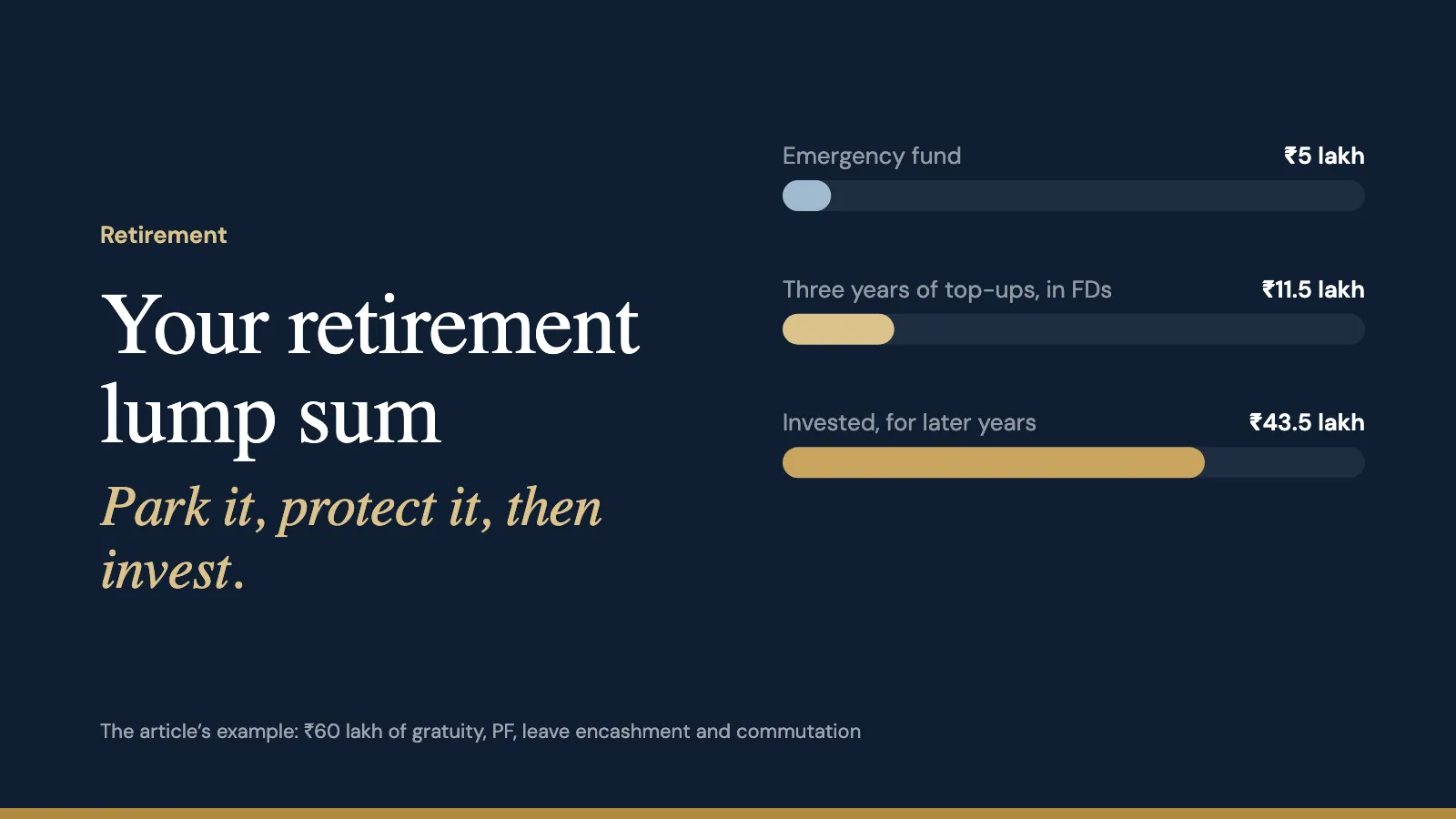
The bigger risk is timing. A fall in your first few years of withdrawals hurts far more than the same fall later, because you’re selling at low prices to pay the bills. That’s why we keep the next three years of spending outside the market. Test your own number, against an FD, in the SWP calculator.
What does a pension change?
Take it off your monthly spend before you use the first table. If you spend ₹40,000 a month and expect a pension worth ₹15,000 a month in today’s money, your savings only need to cover ₹25,000. Retiring at 60, that’s ₹66.4 lakh instead of ₹1.06 crore.
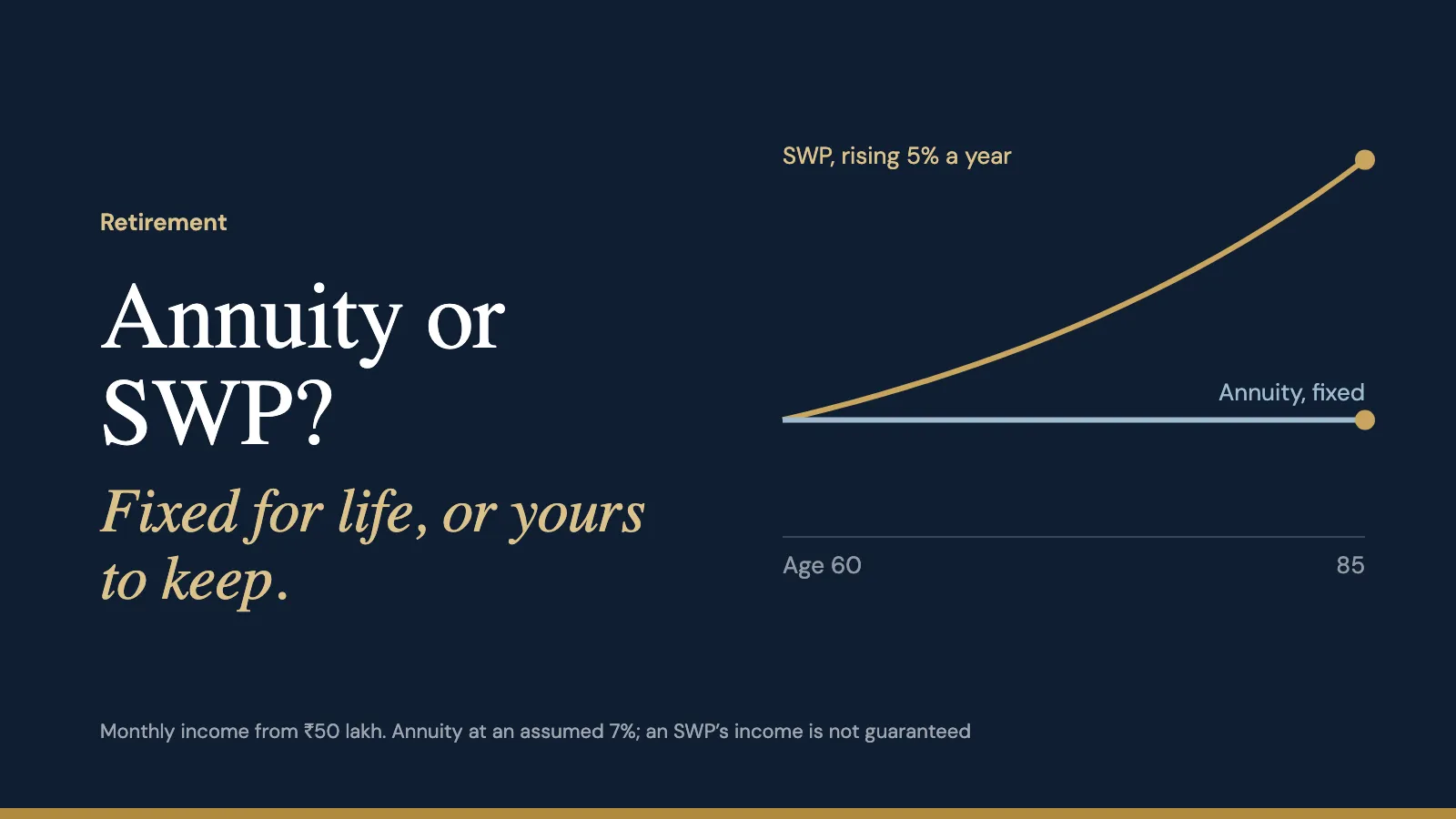
One catch. The table assumes the gap rises 6% a year. A pension that rises with dearness relief keeps roughly in step. A fixed pension or annuity doesn’t: it covers a smaller share of your bills every year, so the gap your savings must fill widens. If yours is fixed, take off less than its full amount.
The same goes for rent from a property. It may rise, but it can also stop.
What about health costs?
Health is the cost most likely to rise faster than the rest, and it tends to arrive in large, unplanned amounts.
- Cover comes first. A health policy is what stops one hospital stay from eating into the money meant to last 25 years. Premiums usually rise with age, so count them in your monthly spend.
- Keep a separate buffer. Money for medical bills should sit where you can reach it within days, apart from the money that pays your monthly income.
- Test a higher rate. If all your costs rose 7% a year instead of 6%, the ₹40,000-at-60 case would need ₹1.26 crore. At 8%, ₹1.5 crore.
Our retirement readiness check asks about health cover and emergencies, alongside the money itself.
Does it matter if you live in Vijayawada or a metro?
It matters, but no table can tell you by how much. Your own spend can.
Retiring in a city like Vijayawada or Guntur often costs less than a metro, mostly because of housing. If you own your home, there’s no rent, and day-to-day costs like help at home and getting around tend to be lower too.
Some costs are much the same anywhere. Health insurance premiums, a car, gold for a wedding, and flights to see children in Bengaluru or abroad cost what they cost. Many people in smaller cities also travel for specialist treatment, which adds to the bill.
So skip the rules of thumb. Use what your household actually spends in a normal month, plus a yearly allowance for the lumpy things: insurance, repairs, travel, festivals and gifts. That’s the number that goes in the first column.
What to do next
- Put your own age, spend and savings into the retirement calculator. It shows what you’ll need, and what to put away each month to get there.
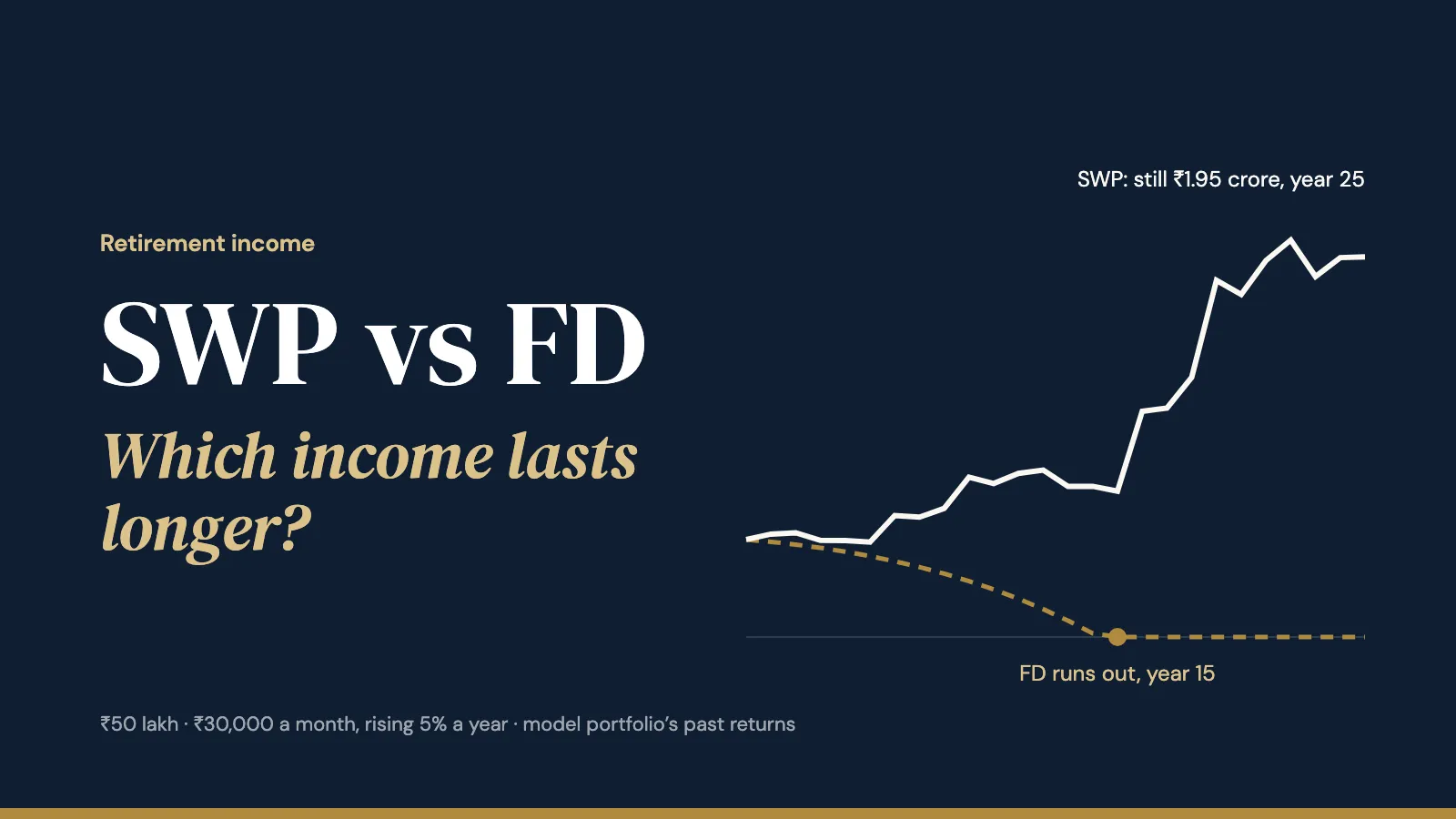
- If you already have the money, see how long it lasts, next to an FD, in the SWP calculator.
- Take the two-minute retirement readiness check to find any gaps: health cover, emergencies, and where the money sits.
When you’d like a second pair of eyes on your numbers, book a review call.